
The 53rd SIGGRAPH conference presented the theme “In-Betweens” in its Art Gallery program — a motto that can also be read metaphorically as capturing the growing cross-connections across the entire conference program. Overall, the conference showcased fewer groundbreaking novelties than innovative connections between its subject areas. Following the personal opening address by Disney Imagineer Lanny Smoot, tracing his career arc from Bell Labs to the HoloTile floor, the subsequent keynotes deepened the convergence narrative from different angles: Nvidia on neural rendering and AI world models, Bolt Graphics on a new GPU architecture for real-time path tracing, and the Tripo AI team on generative 3D creation. The conference’s converging themes resonated through the entire program, in which the boundaries between computer graphics, physics, and AI were increasingly perceived as transitions.
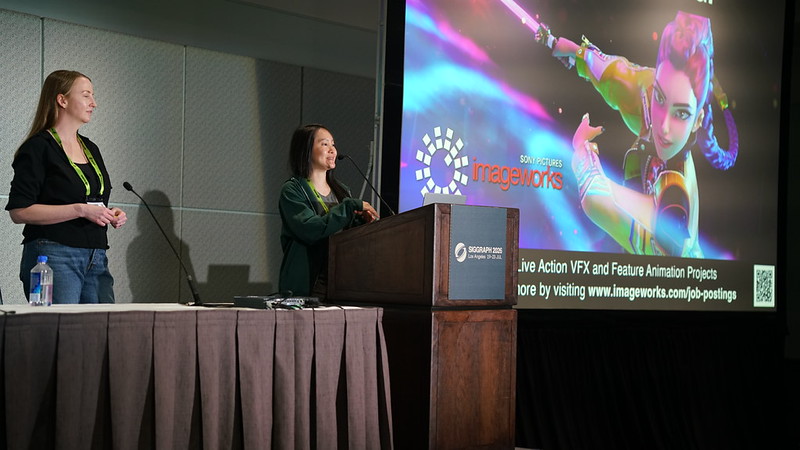
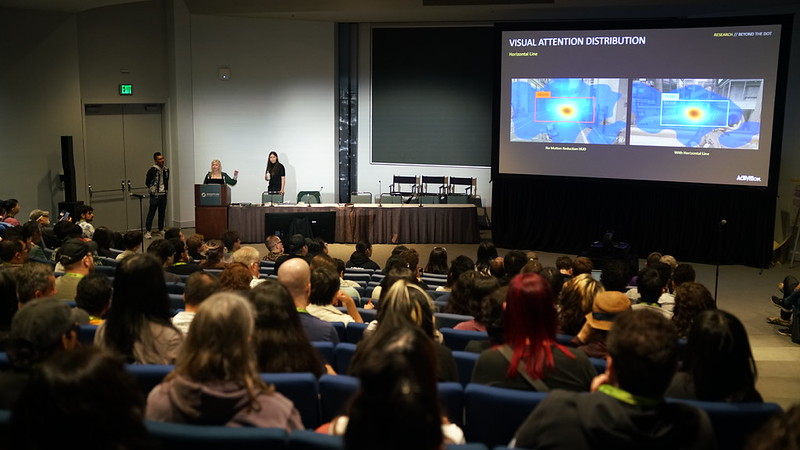
The most striking structural step in 2026 was the newly introduced Games Summit. Beyond the classically rendering-focused SIGGRAPH topics rooted in film, the summit also presented the economics of modern studio production from the interactive entertainment sector, alongside technical sessions on destruction systems and performance capture. As the boundary between film and game production is no longer merely blurred but completely dissolved, game cinematic pipelines increasingly rely on filmmaking techniques, while film productions in turn build on game engines.
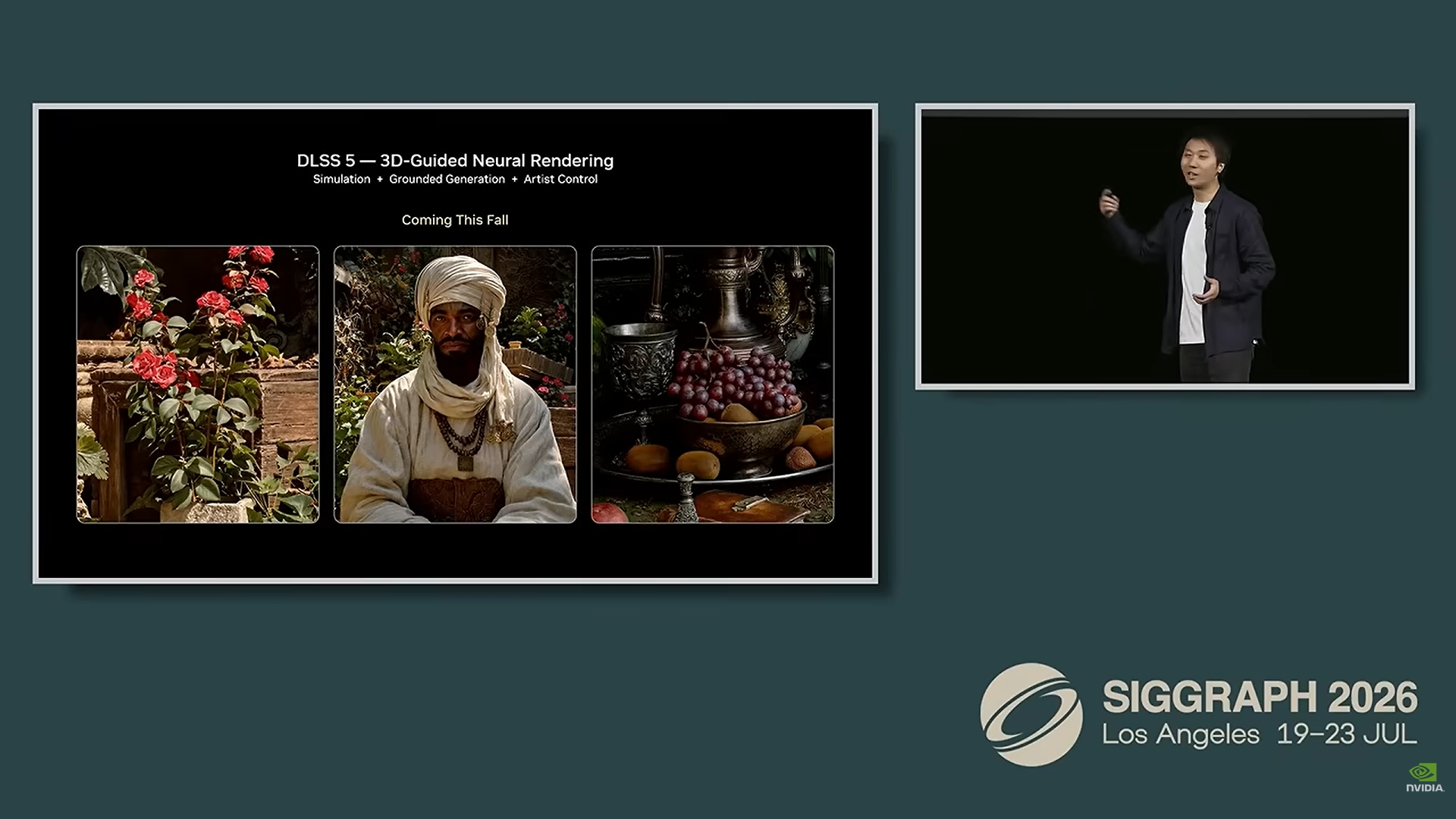
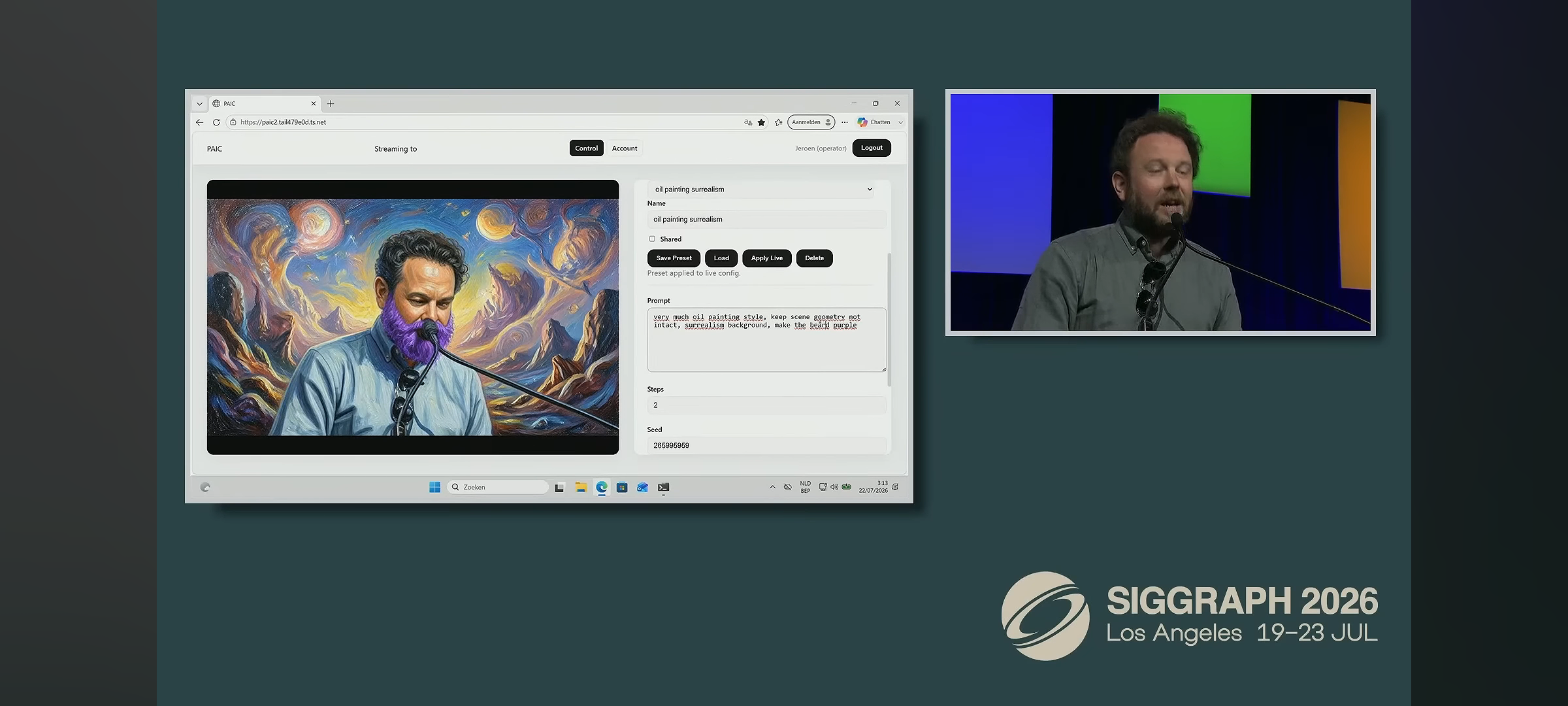
This convergence aligns with the conference’s core production-based themes (rendering, animation, simulation), which are now increasingly being thought of across media boundaries. Another connecting element of this repositioning was robotics, which in 2026 ran as a cross-cutting theme through Technical Papers, Emerging Technologies, and Spatial Storytelling. The same technologies — real-time simulation, generative world models, Gaussian splatting — are becoming equally usable for virtual characters, game worlds, and physical machines.
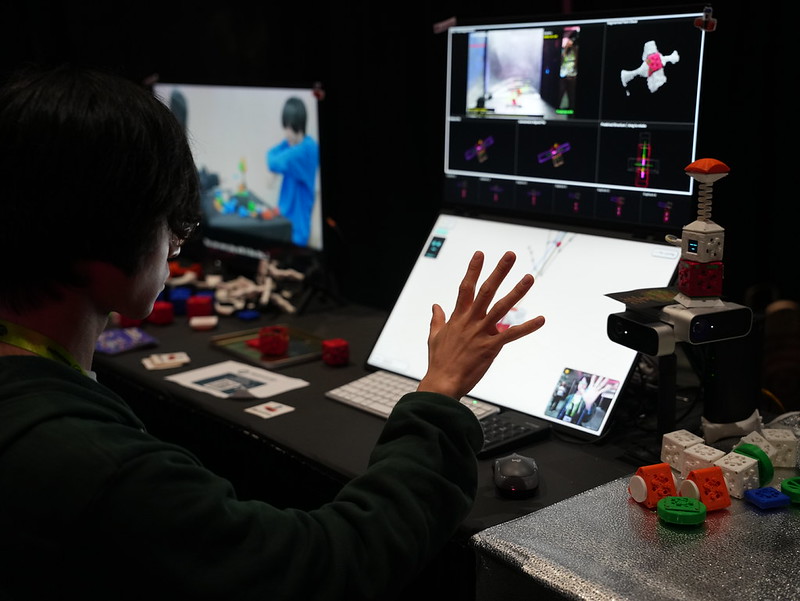
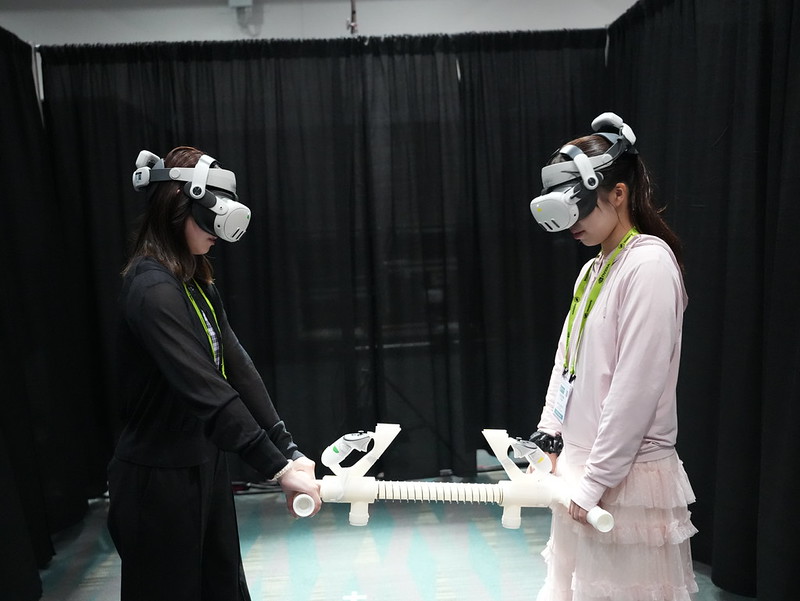
In the XR space, new consumer headsets were notably absent; the focus instead was on research prototypes such as a two-millisecond passthrough headset (“Camsicle”), as well as an eye-tracking-enhanced evolution of the decade-old pinlight display concept, combining a wider field of view with an expanded eyebox. In parallel, signals from the Apple Vision Pro ecosystem intensified with Apple’s third-party controller specifications and Nvidia’s CloudXR bridge. An important step against the proprietary fragmentation prevailing in this space was the latest iteration of the OpenXR Spatial Entity Framework standard for cross-platform spatial anchors and persistent objects. Complementing this, Gaussian splatting gained significant traction: the leap from static to time-based, walkable volumes makes capture-based content usable across film, games, and VR alike.
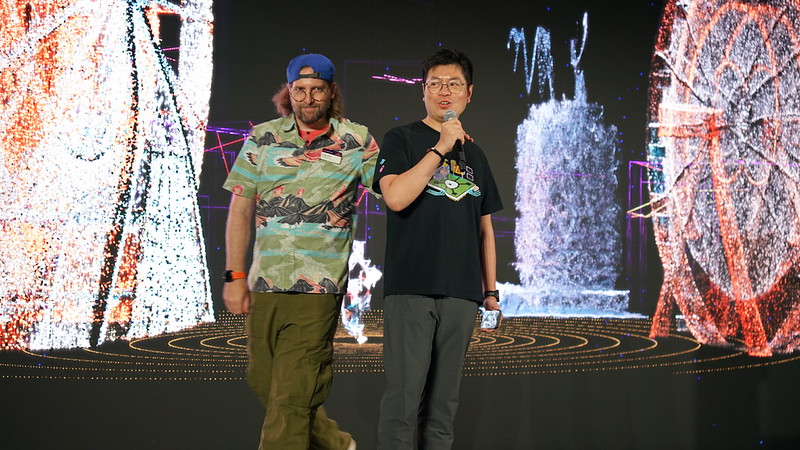
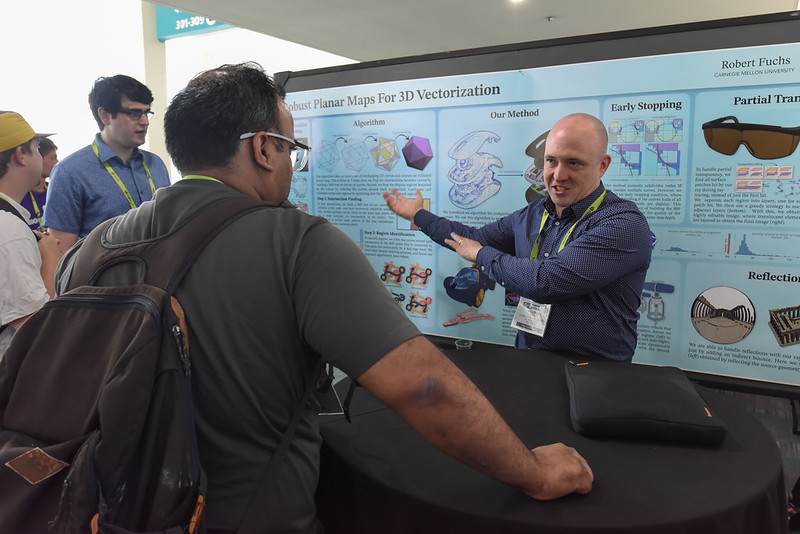
A particularly vivid example of this convergence of thematic threads was provided by Tripo AI, awarded by the audience at Real-Time Live!. The demonstration showed the generation of complete, interactive 3D assets in real time, based on established game mechanics, such that the objects could be immediately integrated into existing game and engine workflows. When asset creation becomes possible within seconds, creative value shifts away from technical craftsmanship toward curation, direction, and conceptual control over generative tools — a question that was intensively discussed at the concurrently held Educators Day.
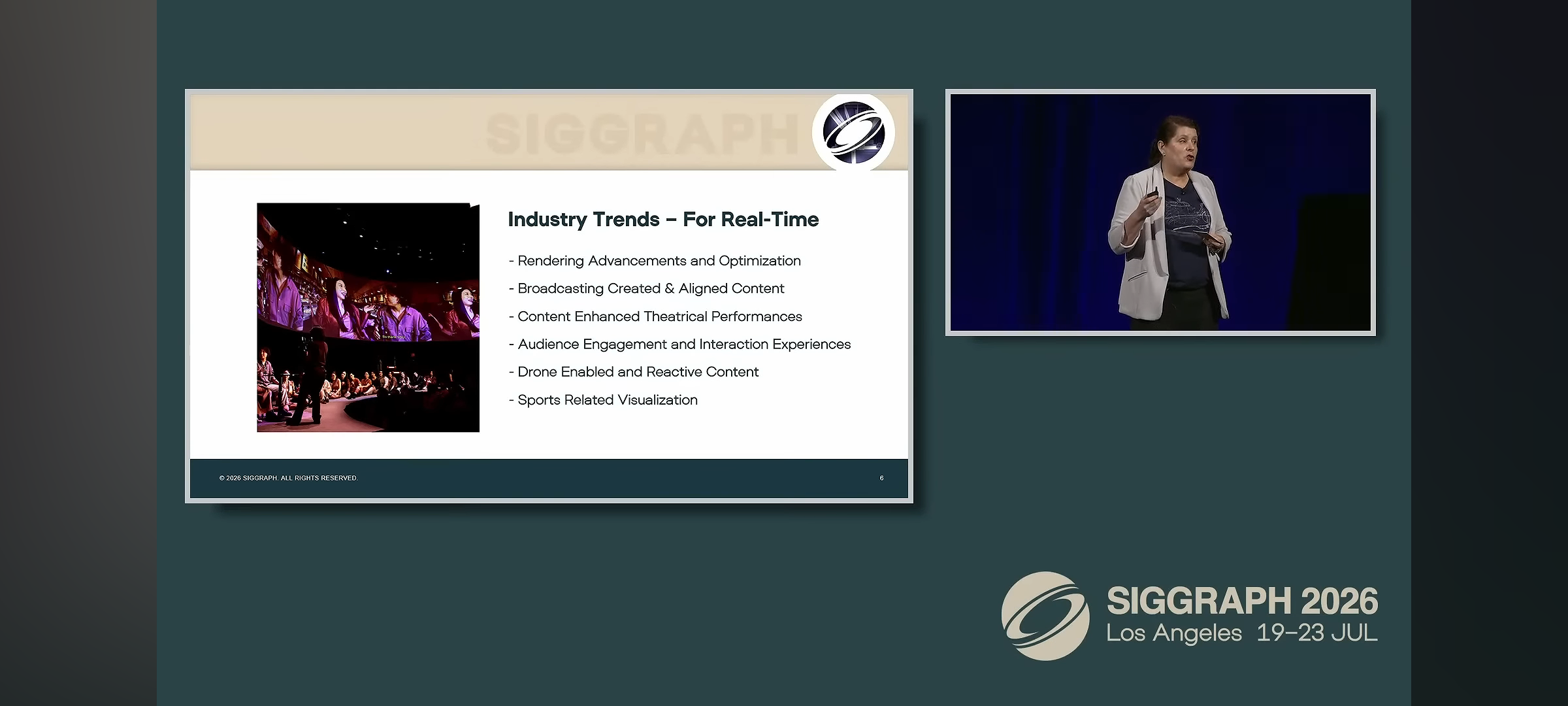
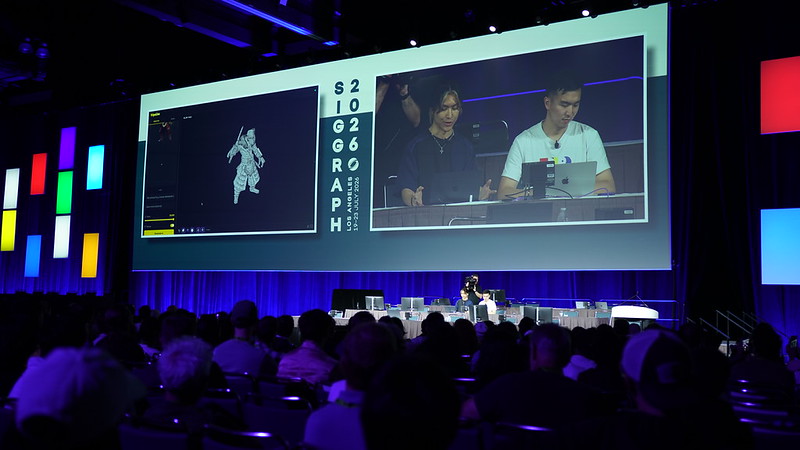
SIGGRAPH 2026 reveals a conference in transition: the production-based core themes remain viable but are increasingly overlaid by an interaction-centered logic in which real-time capability, AI generation, and open spatial standards become a shared foundation for games, film, XR, and — as a peripheral phenomenon — robotics as well. For XR developers, this means gradually lowering barriers to entry for content creation and platform interoperability in the medium term, while the computing performance ceiling on standalone hardware remains the decisive factor against which foveated rendering, compression, and generative real-time pipelines will continue to be tested.
All images: © 2026 ACM SIGGRAPH
